Saturday, November 28, 2015

The Moon Becomes a New Wi-Fi Hotspot


by: Sofia Riñon


Aside from air, water and fresh vegetables, what would you need to survive on the moon? One thing that would likely feature high on the list is a decent, reliable wireless internet. And thanks to a group of researchers from MIT and NASA this kind of connectivity could be within the realms of possibility.

When our brave explorers arrive on the dusty plains of the moon, they’ll be able to live tweet the experience, and even take a selfie for Instagram.

Complimentary Wi-Fi is so common that a business advertising its “hotspot” in the window seems somewhat outdated. But a new hotspot location should impress even the most jaded among us: For the first time, scientists have demonstrated it’s possible to beam a wireless Internet signal across the 238,900 miles separating Earth from the moon.

They have successfully used lasers to send a broadband wireless signal to the moon—with a connection fast enough to stream high-definition video. Admittedly, there’s a sparse lunar audience for YouTube – but this is big news for those interested in pushing the limits of data communication technology to enable deep-space exploration.

Getting the signal through the Earth's atmosphere is difficult, so scientists used four separate telescopes based in New Mexico. Each telescope is about 6 inches in diameter and is fed by a laser transmitter that beams information in coded pulses of infrared light.

Since our atmosphere bends the signal as it travels to the moon, the four telescopes transmit the light through different columns of air, each with different bending effects.

This improves the chances that at least one of the signals will hit the intended satellite. It's kind of like the space version of those Wi-Fi routers with multiple antennas, and the way they can improve the quality of your connection.

The destination here is not the Moon itself, but a satellite currently orbiting the moon, equipped with a telescope, which will collect the laser beams and will focus it into an optical fiber. Then, a photo detector turns the pulses of light into electrical pulses and from there they are converted to data through conventional techniques.

The team has transmitted data across the 384,633km distance between Earth and the moon at a rate of 19.44mbps and has also managed to download data at a rate of 622mbps.

"Communicating at high data rates from Earth to the moon with laser beams is challenging because of the 400,000-kilometre distance spreading out the light beam," Mark Stevens of MIT Lincoln Laboratory stated. "It's doubly difficult going through the atmosphere, because turbulence can bend light-causing rapid fading or dropouts of the signal at the receiver."

Just why the Moon needs Internet isn't really clear, especially as there haven't been any humans on the lunar surface since 1972. Perhaps if the link had been established a few months earlier, China's Jade Rabbit lunar rover could have posted a few lunar selfies and its sad dying message on its Facebook page via Wi-Fi.

So, in light of all that, there’s really only question that remains… “What’s the password?”


Send Your Name to Mars


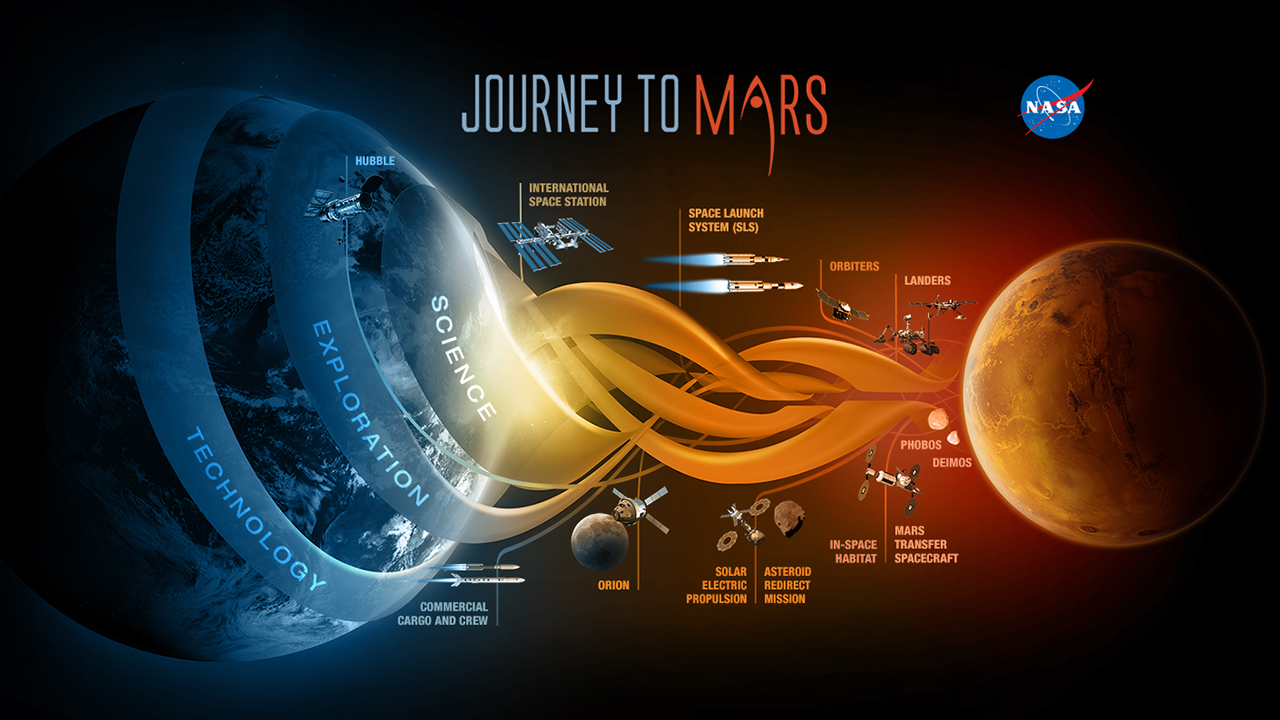
There might not be any free flights to space yet, but it looks like we might get to travel there – at least in spirit. Well, since NASA hasn’t gotten around to offering Mars vacations yet, we’re all pretty much stuck here on Earth for the time being. But never fear, NASA is aware of the human desire to mark our names on the stars, so it’s giving the public a chance to shoot their names into space on the first Orion mission, scheduled to launch on December 4.

Pack lightly because your name’s astronomical journey will begin, flying in comfort on a dime sized microchip when NASA’s Orion spacecraft launches on its first test flight, the Exploration Flight Test-1. It will take off from Cape Canaveral in Florida and will circle the Earth a few times before whizzing back through the atmosphere and landing in the Pacific Ocean.
But if you thought that was the end of your name’s interstellar voyage, apparently not. NASA has bigger plans. After returning to Earth, all the names collected will continue to hitch a ride on future NASA exploration flights and missions to Mars. With each flight, selected individuals will collect more and more "frequent flyer miles," just for fun, giving space fanatics a taste of what it's like to be on one of NASA's missions.

There is a deadline for getting your name on Orion’s first flight. To get a "boarding pass" for the first test flight, you should have submitted your name by October 31. If you miss Orion this time, NASA will still give newcomers an opportunity to sign up for name fly-alongs on future missions.
To sign up, you just go to NASA’s name collecting site, fill out some basic information and submit. The site then created a digital “boarding pass.” Then, you’ll get the simple message “Success! Your name will fly on Orion’s flight test.”

"NASA is pushing the boundaries of exploration and working hard to send people to Mars in the future. When we set foot on the Red Planet, we'll be exploring for all of humanity. Flying these names will enable people to be part of our journey," says Mark Geyer, Orion Program manager, in a news release.

For those even more daring, an alternative mission has been set up by a Dutch company called Mars One. The corporation announced last year that it was looking for volunteer astronauts to fly to the Red Planet on a spacecraft scheduled to depart in 2022 and land on Mars in 2023.

Unfortunately, there is no technology available for a return mission. And yet, tens of thousands of people have volunteered for the program. However, the organization plans to send only four people to Mars, with the hopes of establishing the first human settlement there.

It sounds like a tale from pulp science fiction: volunteers signing up to take a one-way trip to another planet. But that's just what's in the works in the Mars One program.

Will it happen? No one knows for sure. The company says it needs $6 billion to fund the project.
In the meantime, hedge your bets and send your name into space instead.

Who knows, maybe it will get you on the Martian guest list early.

This is not the first time in recent years that man has tried to leave his mark in space. One company has promised to send your dead pet's remains to the Moon, a haiku-carrying robot has entered Mars' orbit and the Japanese government has transmitted Hello Kitty messages into space. So although the general public still only gets to travel to space on a name-only basis this time round, who knows what the future holds.

Human beings just seem to have a natural desire to learn more, to figure out things we don't understand, and to explore the unknown. We humans thrive on new experiences. Space is probably the ultimate "new experience," and one of the best places for humanity to turn to keep learning. It is part of our nature as human beings that we want to explore and try to better understand the world in which we live. Space exploration is the logical extension of that need.


Friday, November 21, 2014

Happiness in a Carbonated Drink


Happiness in a Carbonated Drink
Sofia Urielle C. Riñon


Happiness comes in many forms. You don’t have to do a huge task to spread a little happiness; it can be as simple as a kind word, a smile or just a free Coca-Cola for a friend.
“Share the happiness” is one of the most famous Coca-Cola slogans which have left an impression in the minds of people. We all have to admit that every time there’s a happy or a special occasion, a bottle of ice-cold Coca-Cola product will not be absent. It not just applies to Coca-Cola but it applies to other soda companies as well. Drinking soft drinks is not just limited to special occasions. Every time we feel parched and in need for a cool carbonated drink, we turn to a nice, cool bottle of soda to quench our thirst. It is normally seen in the dinner table, being shared by the family.

You may not admit it but, drinking sodas are already a part of our routine. Although it undeniably has numerous damaging effects on our body, we still enjoy drinking these carbonated drinks.

However, recent news strikes up. Nueva Ecija representative, Estrellita Suansing proposed her House Bill No. 3365 stating that there ought to be additional taxes on soft drinks to curb obesity and other health difficulties brought up by excessive consumption of carbonated drinks.

They are seeking to impose a 10-percent ad valorem tax on soft drinks and other carbonated beverages which gained full support from other sectors as well as some academic experts who are eyeing the move as a pro-health tax measure. Sectors backing up the bill include the Department of Health and Department of Finance.

Suansing added that pursuing the 10-percent ad valorem tax would produce up to P10.5 billion that will serve as rehabilitation funds for calamity victims and for government projects regarding livelihood development and infrastructure. Furthermore, university of the Philippines School of Economics’, Dr. Cielo Magno provided full support on the subject, saying that manufacturing more soft drinks would ensue in the reduction of the country’s water resources given that every half liter would require 150 to 300 liters of water.
Although, there are some who do not support Suansing’s bill. Beverage Industry Association of the Philippines (BIAP) representative, Adel Tamano said that additional taxes will not solve obesity among Filipinos. After all soft drinks are not the only contributors to obesity and diabetes. If they were to impose taxes on carbonated beverages, they might as well do the same to other junk foods such as chips and sweets since they cause obesity as much as, if not more than soft drinks do. Soft drinks account for only 10 percent of caloric intake.

Tamano added that Suansing’s proposal will have a negative effect on the country’s economy. Think of the 25,000 people working in the beverage industry and 1.2 million micro-enterpreneurs. They will certainly be affected in its implementation.

Passing the bill will not lead to the reduction of obesity and diabetes. In fact, passing the bill will only make people want more of these carbonated beverages since it makes soft drinks more expensive and thus, luxurious. In their mind, people who afford having the luxury of buying these carbonated drinks will look classy and well off. Hence, they will buy more soft drinks, wearing off the bill’s purpose of reducing obesity.
Even if they impose bills on soft drinks, they can never take away the Filipino’s love for it. All happy occasions have them. It helps in spreading smiles and opening happiness every day all across the world. Drinking sodas is already a part of our daily habit. Taxes or no taxes, we will still buy it. Besides, what’s a hot day without a cool, refreshing carbonated drink to replenish your senses?